Bauchi State FGN/AfDB Inclusive Basic Service Delivery Programme

About IBSDLEIP

Who We Are

Strategic Partnership for Development

The Inclusive Basic Service Delivery and Livelihood Empowerment Integrated Programme (IBSDLEIP) is a strategic partnership between the Federal Government of Nigeria, the African Development Bank (AfDB), and the Bauchi State Government.

The Programme seeks to improve access to quality water, sanitation and hygiene (WASH), basic education, primary healthcare, and sustainable livelihoods in insurgency-affected communities across Bauchi State.

Through targeted investments and community-driven interventions, the programme aims to reduce poverty, strengthen human capital development, and improve the quality of life of vulnerable populations, particularly women, youth, and rural households.

"The Bauchi State Government, under the visionary and passionate leadership of His Excellency, the Executive Governor, Senator Bala Abdulkadir Mohammed, CON, Kauran Daular Usmaniyya and Kauran Bauchi, is therefore very much committed and supportive of the successful implementation of this programme for the benefit and improvement of the wellbeing of the people Bauchi State."

Who We Impact

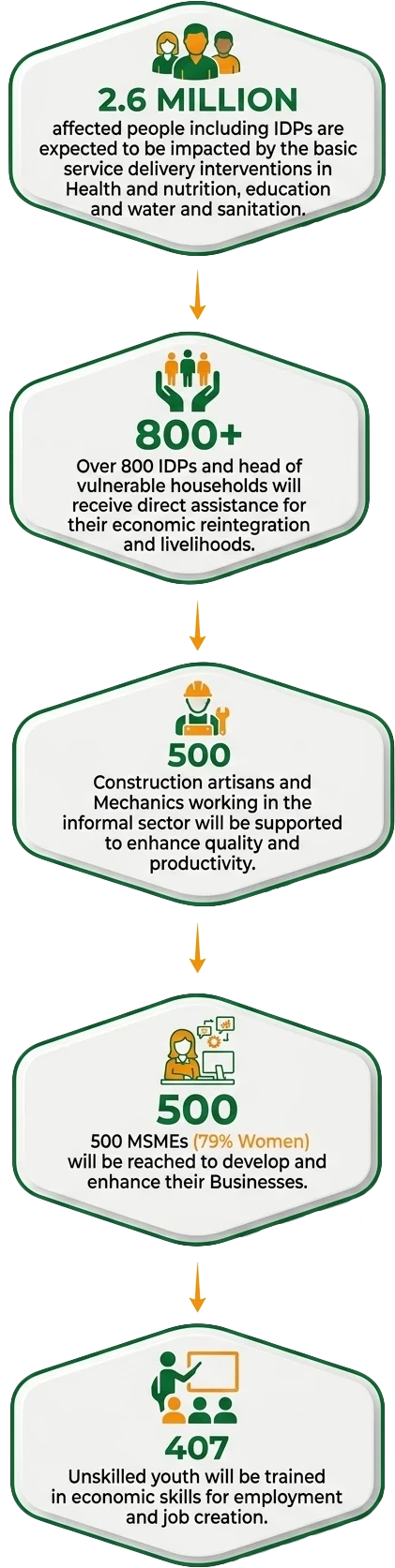
Programme Beneficiaries

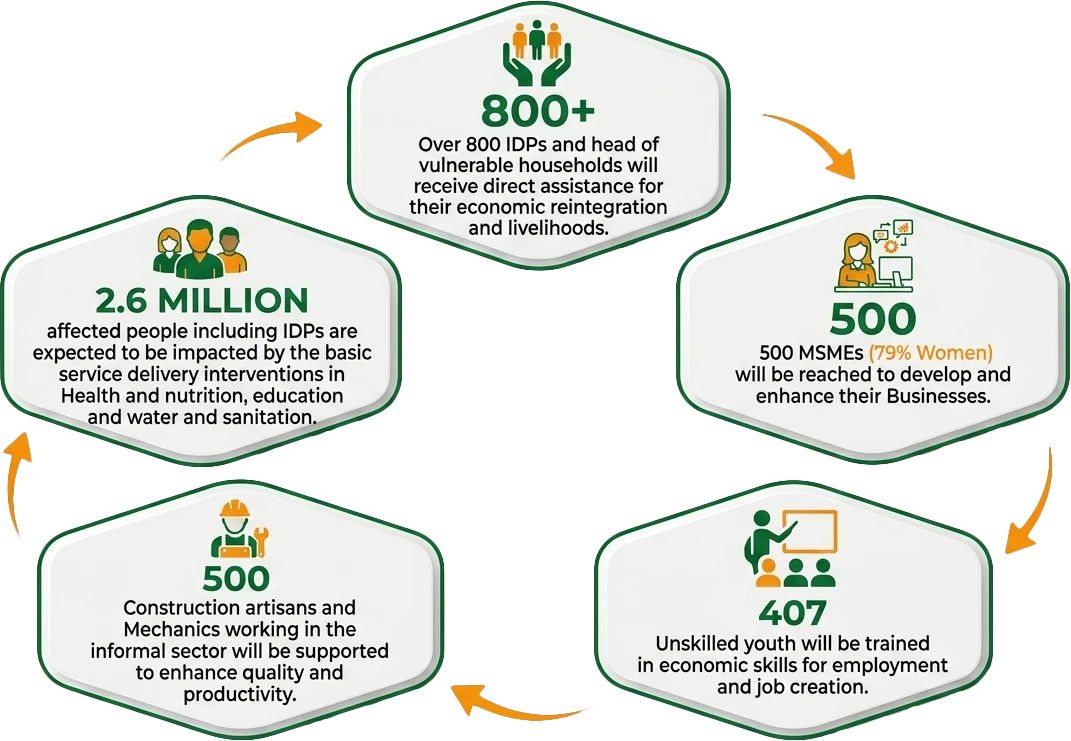
The programme targets specific demographics to maximize community revitalization and socio-economic recovery.

Our Approach

Implementation Principles

The programme implementation is anchored on three major reinforcing components, driving these core objectives.

Capacity Building

Ensuring delegation of responsibilities down to the "lowest possible level" through a training programme for personnel at all levels and community self-selection prioritization procedures.

Gender Equality

Gender aspects are considered at all stages. Women's active involvement in planning, management, and operations is prioritized, while men are encouraged to participate in non-traditional roles.

Accountability & Transparency

Promoted through training in community management, transparent bookkeeping, yearly auditing, participatory monitoring, and by-law preparation.

Sustainability & "Build Back Better"

Fostering critical analysis of needs and problem-solving capacities. Emphasizing environmental protection, ergonomic improvements, and an interdisciplinary holistic approach.

Our Goals

Programme Objectives

Development Goal: To contribute to reduced poverty and vulnerability in Nigeria by promoting increased access of the poor and vulnerable to basic social services, livelihood opportunities and job creation in the context of the Northeast emergency transition, recovery and peacebuilding framework.

01

Infrastructure Development

Improved Gender-sensitive infrastructures for Primary Health Care Centers (6 model PHCs), Schools (6 model primary schools) and WASH facilities to reach 80% coverage.

02

Skills Acquisition

Enhanced skills acquisition and upgrade for service workers, reaching over 500 artisans, 407 unskilled youth, and reaching 500 MSMEs with enhanced businesses (79% Women).

03

Hygiene & Sanitation

Strengthened awareness on hygiene, sanitation, water quality/conservation to achieve 5,000 Additional Open Defecation Free (ODF) communities.

04

Accountability & M&E

Enhanced M&E and demand-side accountability, promoting an 80% satisfaction rate on services provided by agencies supported by the programme.

05

Enhanced Nutrition & Health

Enhanced nutrition for infants and mothers. Decreasing underweight ratio of children under 5 from 25% to 20%, and increasing basic vaccination to 50%.

Governance

Institutional Arrangements

The programme is implemented at both the Federal and State levels, ensuring robust oversight and coordinated execution.

State Steering Committee

Chaired by the Secretary of State to the Governor or a duly appointed official. Membership comprises Commissioners from relevant Ministries including Water Resources, Education, Health, Agriculture, Commerce, Women Affairs, SMEDAN, Finance, and Local Government. The committee provides strategic guidance, oversight, endorses annual work plans, vets LGA prioritization, monitors progress, and addresses risks.

State Implementation Unit (PIU)

Headed by a program coordinator appointed by the State Government, with designated sector leads from participating state MDAs. The PIU is responsible for the day-to-day coordination of implementation, execution of specific programme activities under each sector lead, and reporting among participating ministries. The PIU also hosts the secretariat of the State Steering Committee.